Security is where most people lose time at the airport. Someone has to take shampoo out of their bag, someone gets called back because of a power bank in their suitcase, someone pays for extra weight at the check-in desk. Almost all of this can be avoided at home, while you pack. Below we answer the questions people ask most often.
Personal item, hand luggage and checked baggage are not the same thing
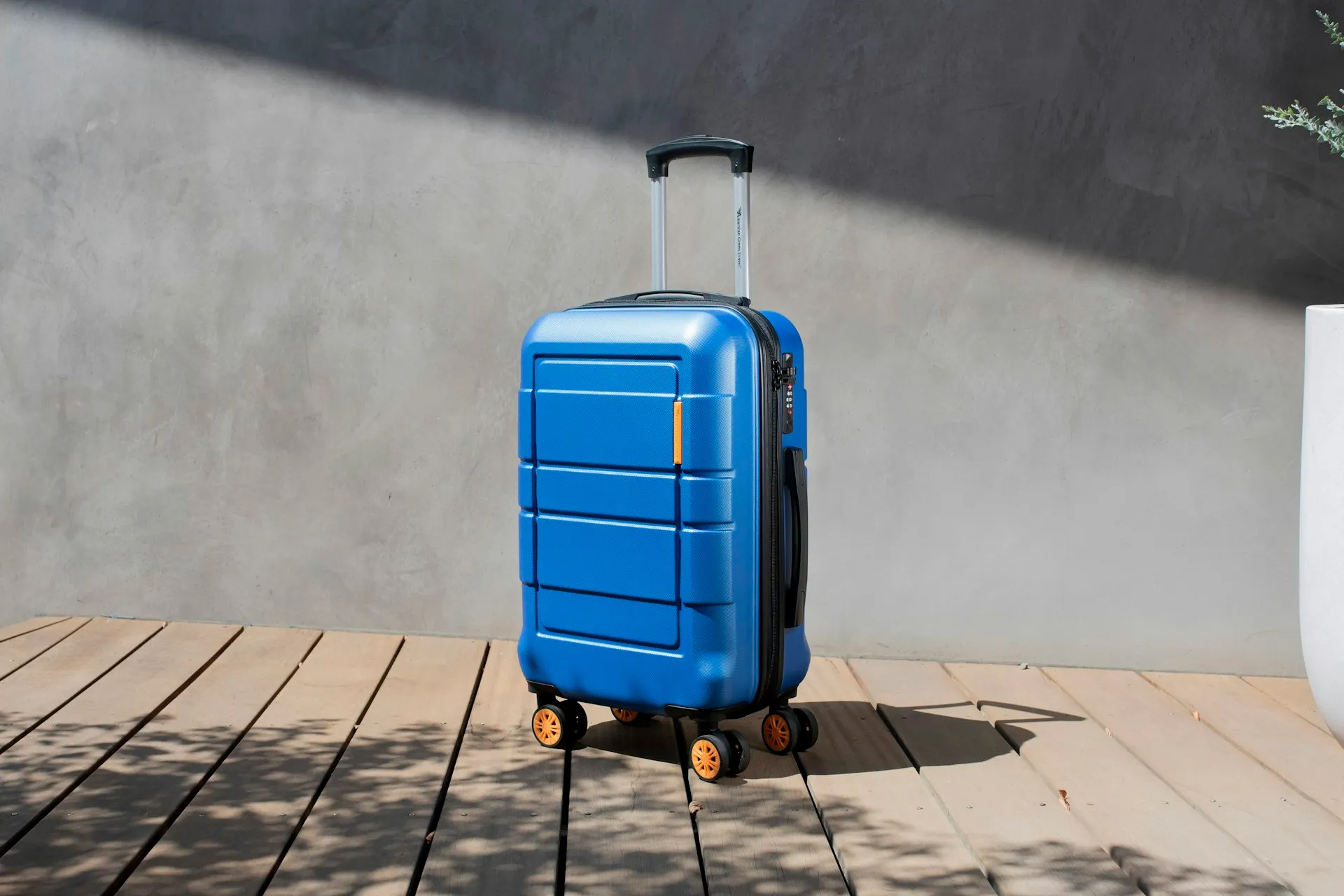
When you buy a ticket you usually see three terms. A personal item is a small bag that fits under the seat: a laptop bag, a handbag, a small backpack. Hand luggage is the small suitcase or larger backpack you put in the overhead bin. Checked baggage is the suitcase you drop off at check-in, which travels in the hold.
Which of these your ticket includes depends on the fare. On cheap fares, especially with low-cost airlines, often only the personal item is free. So before you celebrate a cheap ticket, check what the fare actually includes.
Hand luggage size and weight
There is no single rule for everyone; each airline sets its own limits. The most common size is about 55×40×20–23 cm, and the weight limit is usually 7–10 kg. Personal items have smaller limits. Check the exact figures on your ticket or the airline's website, and remember that wheels and handles count towards the size.
Liquids: the 100 ml rule
At most airports the rule for liquids, gels and aerosols in hand luggage is the same: each container can hold no more than 100 ml, and all containers must fit into one resealable clear bag of about 1 litre. One bag per passenger. What counts is the size printed on the container, so a half-empty 200 ml tube of cream won't get through.
Medicines and baby food you need during the flight may be exempt, but you'll have to show them at security. Some airports have installed new scanners and relaxed the rule. That isn't the case everywhere, though, and your return flight may leave from a different airport, so it's easier to stick to 100 ml.
Power banks: what changed in 2026?
This is the topic that causes the most confusion. Since 27 March 2026, new requirements from the International Civil Aviation Organization (ICAO) apply:
- each passenger can carry no more than two power banks;
- power banks go in hand luggage only, never in checked baggage;
- you can't recharge the power bank itself during the flight;
- up to 100 Wh needs no approval, 100–160 Wh needs the airline's approval, and anything over 160 Wh is banned.
Some airlines are stricter still. The Lufthansa Group, for example, also bans charging a phone from a power bank on board. Keep your power bank with you rather than in the overhead bin. Capacity is usually shown in mAh. To convert it to Wh, multiply the mAh figure by the voltage and divide by 1,000: 20,000 mAh × 3.7 V ≈ 74 Wh. So an ordinary 20,000 mAh power bank is fine.
What can't go where?
Knives, sharp tools, large scissors, flammable liquids and most sports equipment are banned from hand luggage. Checked baggage is the opposite: no power banks, spare lithium batteries or e-cigarettes. The lists vary a little by country and airline. If you're unsure about an item, either leave it at home or ask the airline in advance.
A few small tips for packing your suitcase
- Keep your passport, money, keys, medicines, electronics and valuables in your hand luggage.
- Weigh your suitcase at home. Paying for extra weight at the airport is much more expensive.
- Put a tag with your name and phone number inside and outside the suitcase.
- Take a photo of the suitcase before you drop it off. If it gets lost, it will be easier to describe.
When is extra baggage cheaper?
With almost every airline, adding baggage when you book or during online check-in costs less than at the airport. When you compare tickets, look at the final price with baggage. Sometimes a fare that includes baggage works out cheaper than a basic fare with baggage added later. We go into this in our article on 12 ways to find cheap flights.
What if your bag doesn't arrive or is damaged?
First of all, don't leave the arrivals hall. Go to the airport's baggage services (Lost & Found) desk and have an official report (PIR) filed. Without it, a claim becomes much harder later. Under the Montreal Convention, you have 7 days to send the airline a written complaint about damaged baggage and 21 days for delayed baggage. Keep all receipts and your baggage tag.
Before you leave
In short: check what your fare includes, split liquids into 100 ml containers, put the power bank in your hand luggage and weigh your suitcase at home. These four steps will save you half an hour at the airport and maybe some money too. If this is your first flight, have a look at our 10 tips for your first trip abroad. You can compare flights on AviaBazaar.